

Map spoilers: the graphic and linked map identify hidden locations. Save this post until you’re ready to see those details.
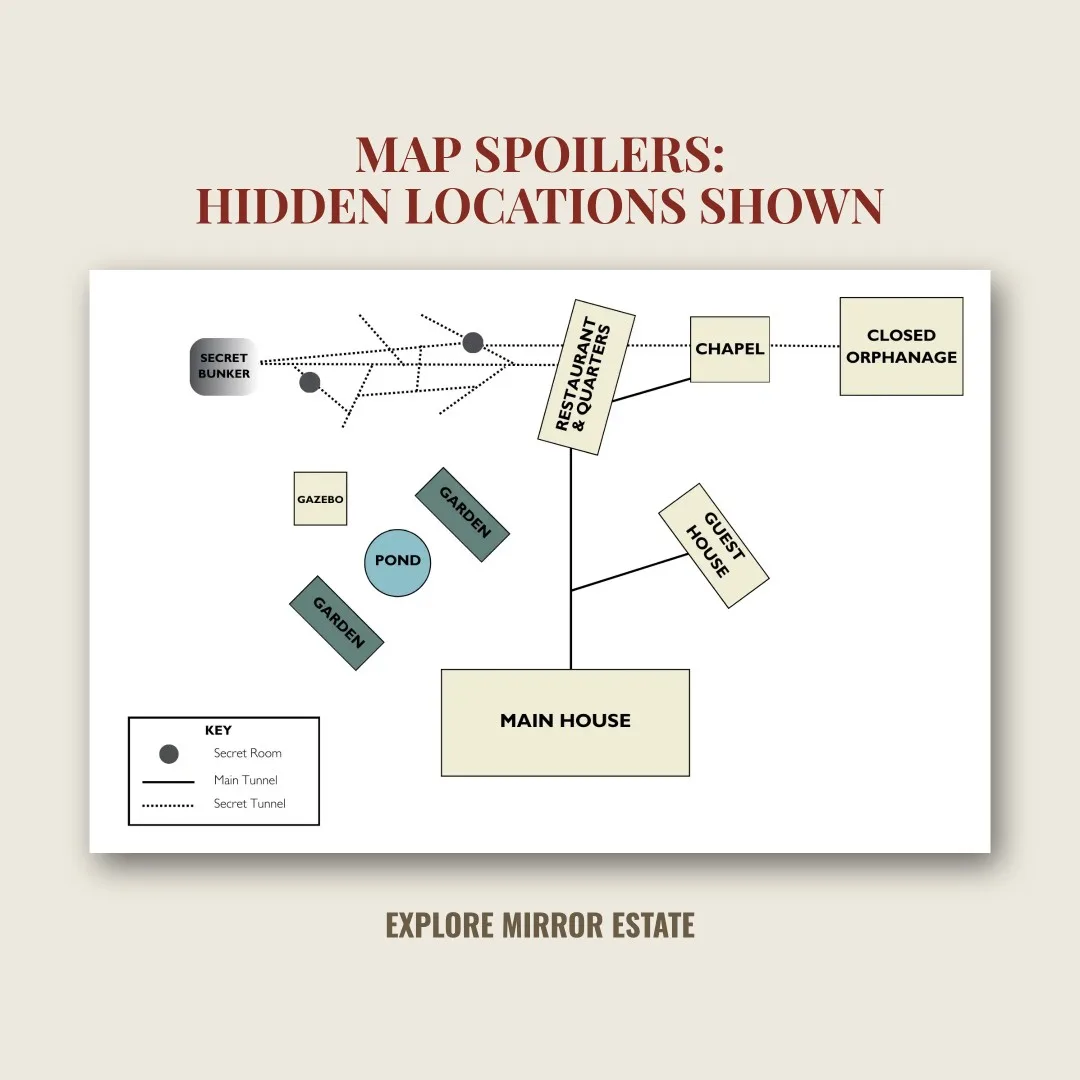
When a story takes you back to the same place, do you start building a map in your head? You might remember where someone arrived, which building they entered, or how far apart two places seemed.
Then you see a map and discover that your imagined version looks a little different. That can be part of the fun, as long as you don’t feel you need to memorize the layout before turning another page.
For readers who like a visual reference, there’s an estate map on the website. It’s one of the extras available alongside the Mirror Estate books.
A reference, not an assignment
You can look at the map before settling down to read, keep it available for an occasional glance, or wait until you’ve finished a book. There’s no test afterward.
A map can be useful when you want to place a location you’ve just encountered. It can also be enjoyable simply to compare the drawing with the place you’ve been picturing. Sometimes a visual guide answers a small question that would otherwise stay at the back of your mind.
But if you prefer to discover everything through the story, you can leave it for later. A reading extra should add to your visit, not become another thing you have to do.
Choose your own level of detail
The Reader Hub gathers the map with other Mirror Estate material. Those extras serve different purposes, so choose carefully if you’re still making your way through the books. Recaps and relationship information are best approached with your reading progress in mind.
If you enjoy keeping a book and its setting side by side, take a look. If not, it will still be there when curiosity catches up.
Do you prefer a map at the beginning, or do you like to imagine the setting first?