

Charlie O’Rourke has two reasons to want answers when a teenager disappears. He is an FBI agent. He is also the father of the missing girl’s best friend.
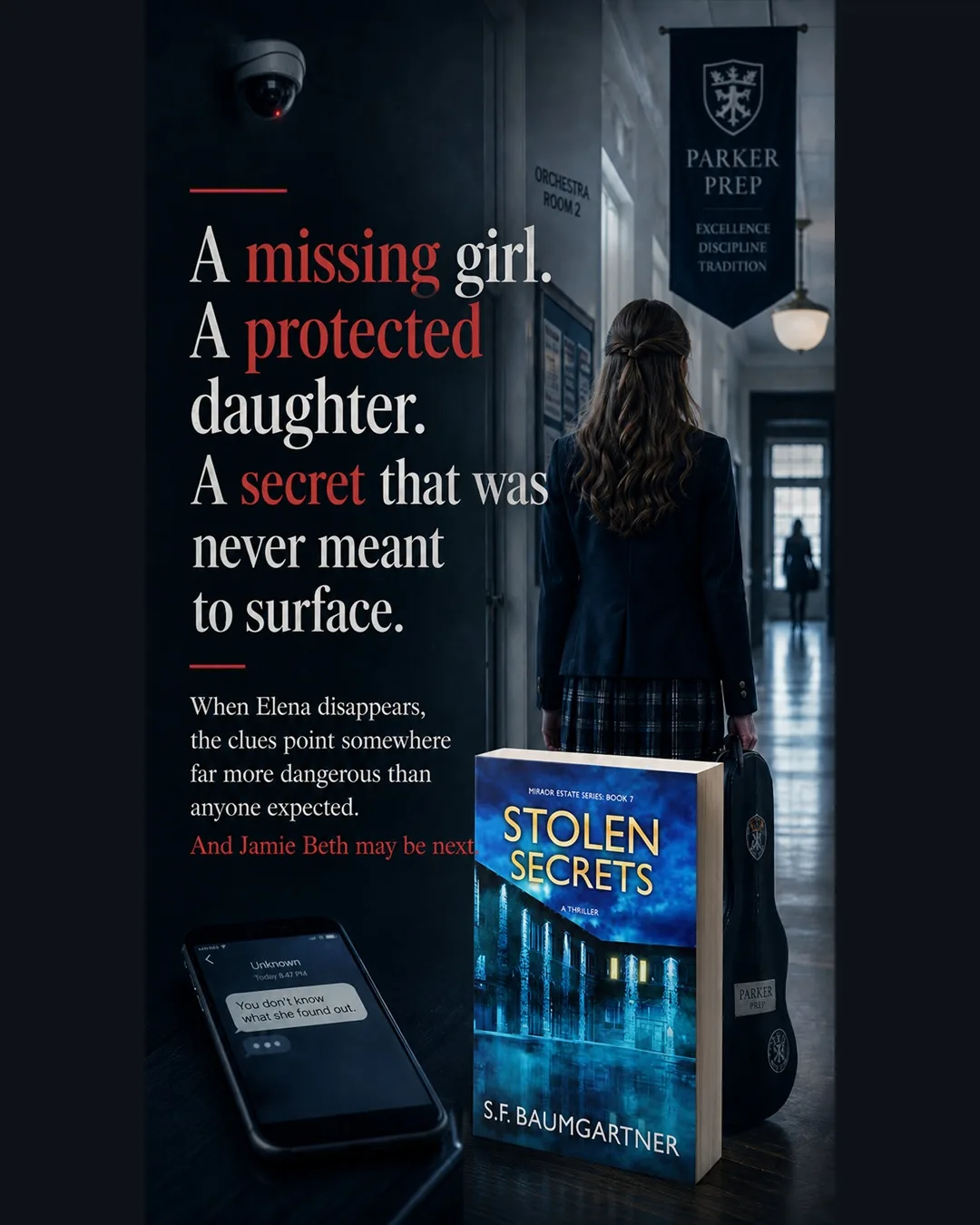
In Stolen Secrets, Charlie believed adopting Jamie Beth would keep her safe. When her best friend vanishes during a school band rehearsal, he discovers that the danger has a connection to the daughter he has tried to protect.
The case cannot stay at work
Professional experience can help Charlie recognize a threat. It can’t give him the distance he might have if another family were involved. The person he needs to protect is someone he knows as his daughter, with a life that reaches far beyond the investigation.
Jamie Beth is worried about her friend and searches for answers of her own. She doesn’t know that she’s the next target. That difference in what father and daughter understand adds pressure to every decision about her safety.
Protection is more complicated than a warning
A parent may see reasons to be cautious that a teenager cannot yet see. The teenager still has friendships and questions that matter. In suspense, those two perspectives can bring people who love each other into conflict even when they want the same outcome.
Charlie’s challenge is especially difficult because a threat he believed he had guarded against is reaching into Jamie Beth’s life. As an agent, he has procedures to follow. As her father, he must live with what happens if those procedures don’t protect her in time.
That’s the part of Stolen Secrets I wanted to spotlight today: the personal responsibility behind the investigation. Finding out who’s responsible matters because a family is trying to keep its daughter safe.
You can read more about Stolen Secrets here.
When a suspense story follows both a parent and a teenager, do you tend to understand one viewpoint more readily, or find yourself taking both sides?