

A weapon can tell investigators how someone died. A piece of paper may tell them why.
That is one reason I enjoy building mysteries around records, photographs, receipts, timestamps, and other ordinary objects. They look harmless. Most people would pass them without a second glance. In the right hands, however, one small inconsistency can challenge an entire official story.
The clue that refuses to stay quiet
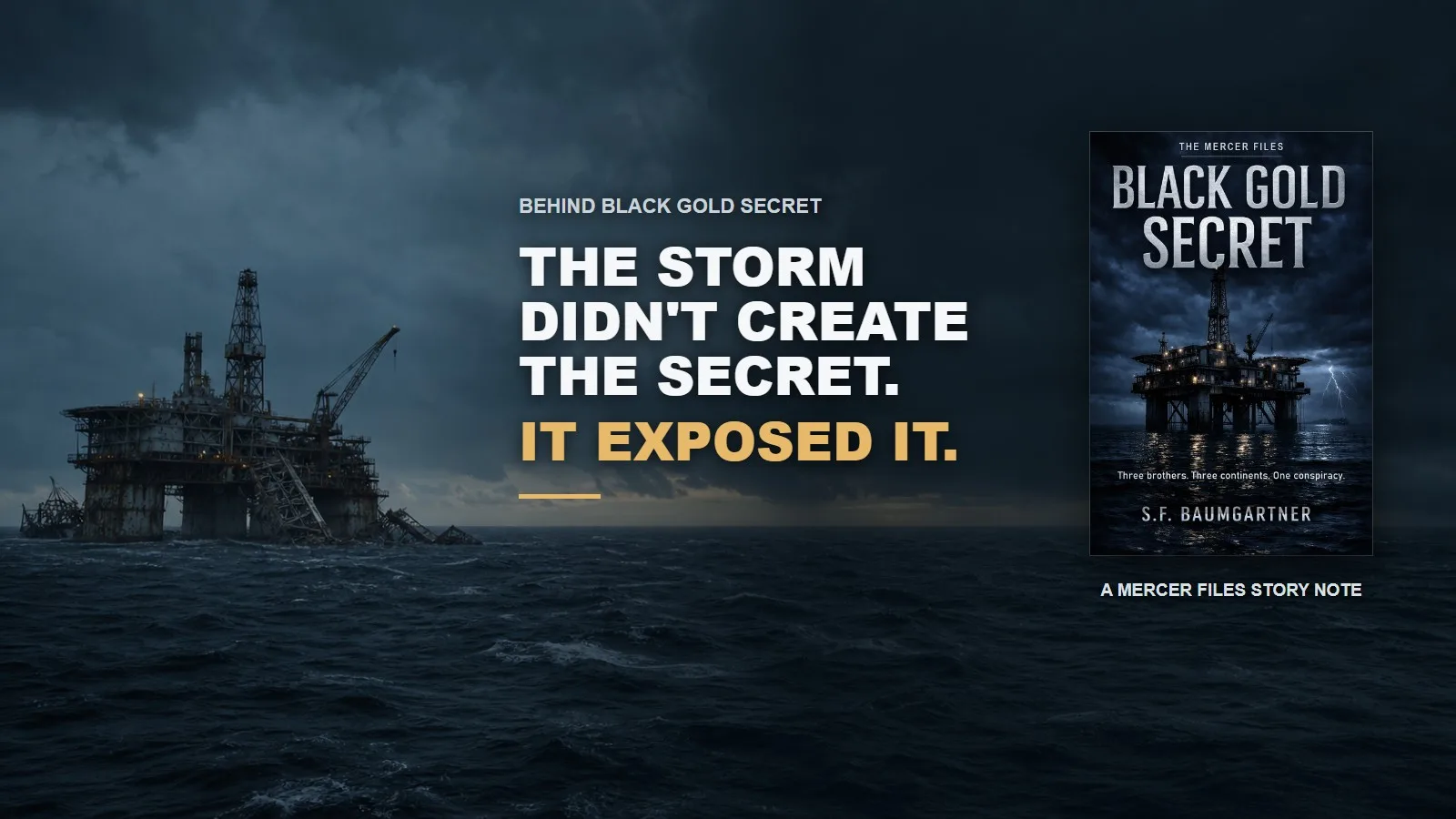
In Black Gold Secret, Gemma Klein receives an anonymous envelope containing a ledger page and a short note. Those few items point her toward Blackwater Rig Three, an offshore disaster that was ruled an accident more than twenty-five years ago.
A ledger is not dramatic by itself. Its power comes from the question it raises: If the official account was complete, why did someone preserve this page, and why send it now?
Lethal Design approaches evidence from a different direction. Frank Travers has carried an unsolved case for ten years. When he examines the details again, the problem is not a complete absence of clues. It is that pieces of the old story do not fit as neatly as they once appeared to.
Evidence also reveals character
The most interesting clues do more than advance the investigation. They force a character to decide what the truth is worth.
Will a reporter risk her career on a page she cannot yet explain? Will an investigator reopen the most painful chapter of his life? Will a witness admit that a familiar memory may have been wrong?
That moment of choice is where a quiet object becomes dangerous. The clue has not changed. The person looking at it has.
You can preorder Black Gold Secret, releasing September 8, or read Lethal Design now.
Which clue would catch your attention first: a handwritten note, an altered record, or an old photograph?