

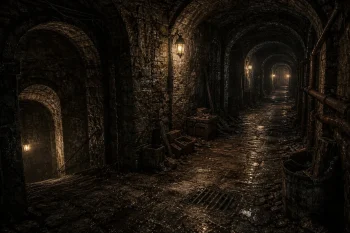
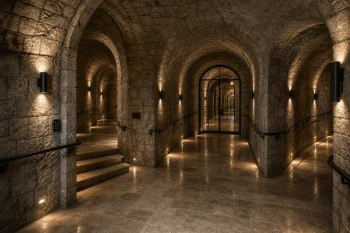
One of the most memorable features of Mirror Estate is its tunnel system.
Readers often assume the tunnels were part of the plan from the very beginning. The truth is much simpler.
Originally, the tunnels were designed for a practical purpose.
The inspiration came from a college campus I visited years ago. The campus had an extensive network of underground tunnels connecting various buildings. Students, faculty, staff, and visitors could move from place to place without having to face snow, rain, or other harsh weather conditions.
I thought it was fascinating.
Of course, Orlando—or Marian, the fictional town where Mirror Estate is located—doesn’t have to worry about snowstorms. Still, I loved the idea of connected buildings and hidden passageways beneath the surface. In the early stages of the series, the tunnels simply linked the main house, guest house, and restaurant areas of the estate.
Then the stories grew.
As the mysteries became more complex, I found myself looking for new ways to build suspense and uncover long-buried secrets. That’s when the tunnel system began to expand. Portions of it became abandoned. Some sections were sealed off and forgotten. Others existed only in old records and fading memories.
Eventually, parts of the network were rediscovered.
For those older, neglected sections, I drew inspiration from another real-life experience. During a pilgrimage to Italy, I had the opportunity to explore portions of the ancient catacombs. Walking through those underground passages left a lasting impression on me. The narrow corridors, the history hidden beneath the surface, and the sense that every turn might reveal another story all stayed with me long afterward.
Those memories found their way into Mirror Estate.
Today, the tunnels have become one of the defining features of the series. Some have been restored and renovated. Others continue to hold pieces of the estate’s history.
After all, every old estate has secrets.
At Mirror Estate, some of them are hidden underground.